
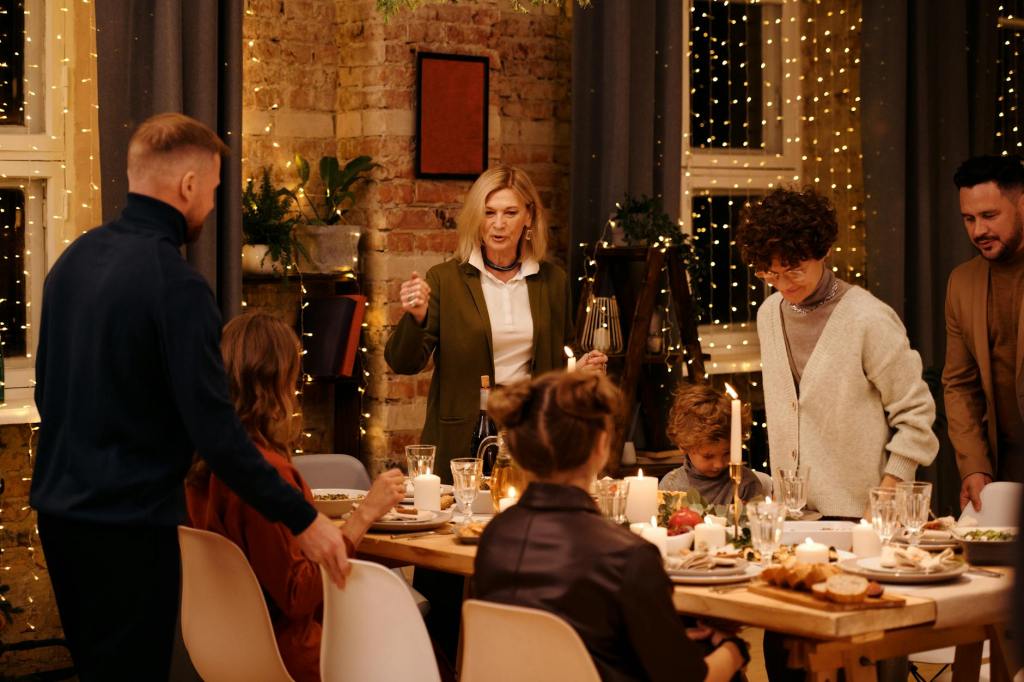
Hello, Hopeful Readers!
There are three general areas of questions I receive about Etiquette and Communication:
- How to properly “dine” or use table manners.
- How to deal with difficult conversations
- How to handle interesting social situations
Questions from readers and clients are some of my favorite things!!
I thought it would be fun to take one week a month and look at each topic.
Let’s start with table manners:
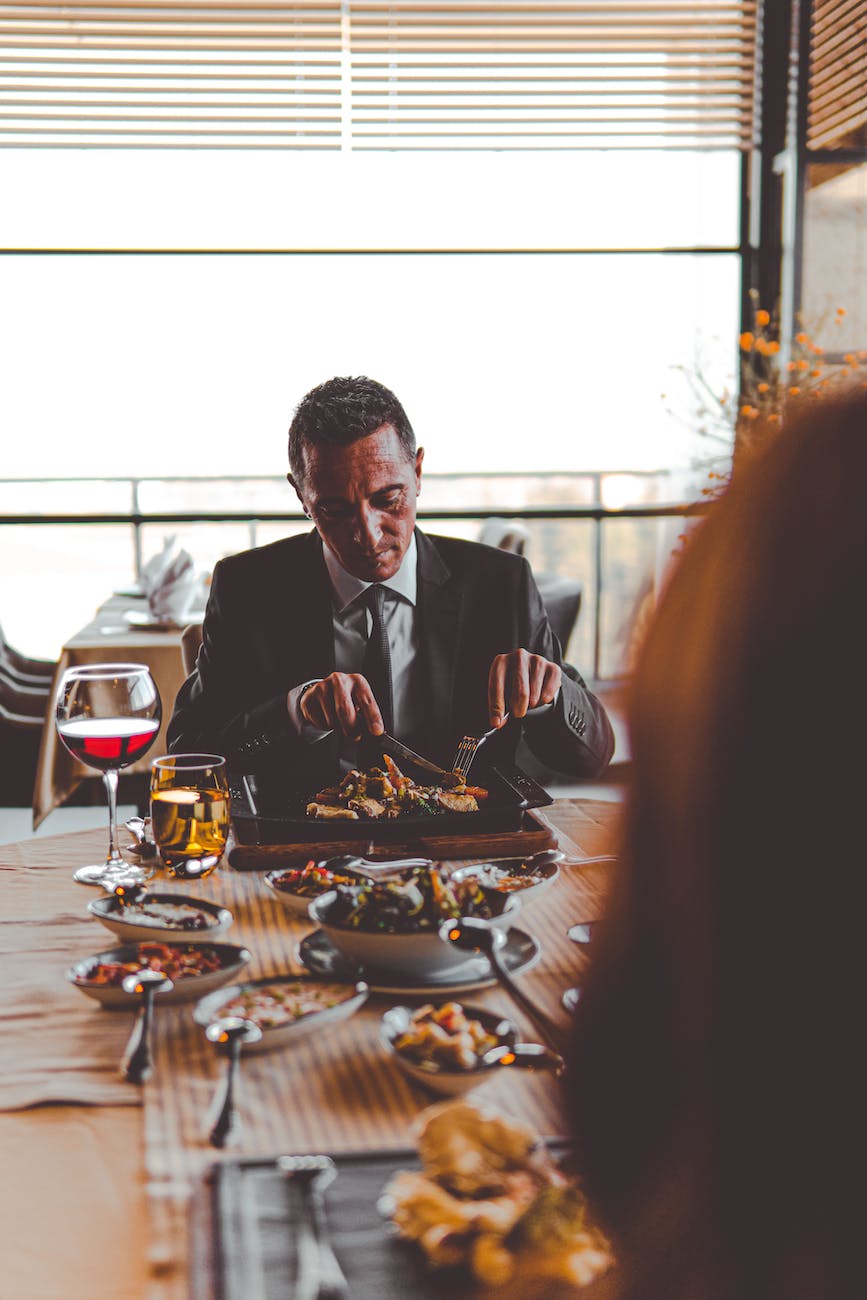
The way we learn how to behave at the table starts at home. I like to discuss with my clients the difference between etiquette and manners. In my words, etiquette represents a set of guidelines or generally accepted customs that are consistent across cultures and settings.
Things like:
- Chewing with your mouth closed.
- Sitting up and engaging with your fellow diners
- Not “talking over” other people during polite conversation.
I believe that manners are more “regional” or somewhat location-specific. I like to share the story of meeting my husband’s family for the first time. I am from Texas; we have a certain formality to how we speak to people we are meeting for the first time. When I met my future-in-law-family, I responded to a question with, “Yes, Ma’am”. This was not well received. They are New Yorkers for the most part, and as such they say things directly and without a lot of fanfare. I remember one of his cousins telling me to “…lighten up and just say what I want to say!” That was startling to me. Apparently, volume and frank words are appropriate etiquette for conversation in some situations. That was not a part of my world growing up. So, I had to learn how to still speak in a manner I feel that reflects who I am as a person, but still respect that certain turns of phrase would be offensive to other parts of the world.
All that to say, there are a few core manners that will always work well in any social situation. Below are three things that I am often asked regarding table etiquette:
- Where does my napkin go?
Simply, your napkin goes in your lap when you are seated.
When you arrive at a restaurant and the silverware is rolled inside a cloth napkin, it is appropriate to unroll the napkin, place it in your lap. Then place the silverware as follows:
- Fork on the left of the place setting
- Knife to the right of the plate, blade faces toward the plate.
- Spoon to the right of the knife.
If there is a steak knife it is placed closest to the plate, then the dinner knife, then the spoon.
- Your napkin goes in your lap and stays there.
- The napkin should be folded in half with the open part of the fold facing you.
- A napkin is not a blanket, it stays below the level of approximately your belly button.
- Your napkin does not go back on the table until the end of the meal.
If you need to excuse yourself from the table, place the napkin in your chair. A member of the restaurant team could refold it while you are away, and they might place it on the table. But you leave it on your chair.
Why might you leave it on your chair? Perhaps the napkin was used and now has stains on it. Those could be “unsightly” or just not pleasant for those dining with you to see near the food they are eating.
- When the host of a meal places their napkin on the table, the meal is finished.
- When you are ready to leave the table, you scoot your chair back, remove your napkin from your lap and then gently place it next to your plate. Then rise from your chair, assist your fellow diners as needed and leave the table.
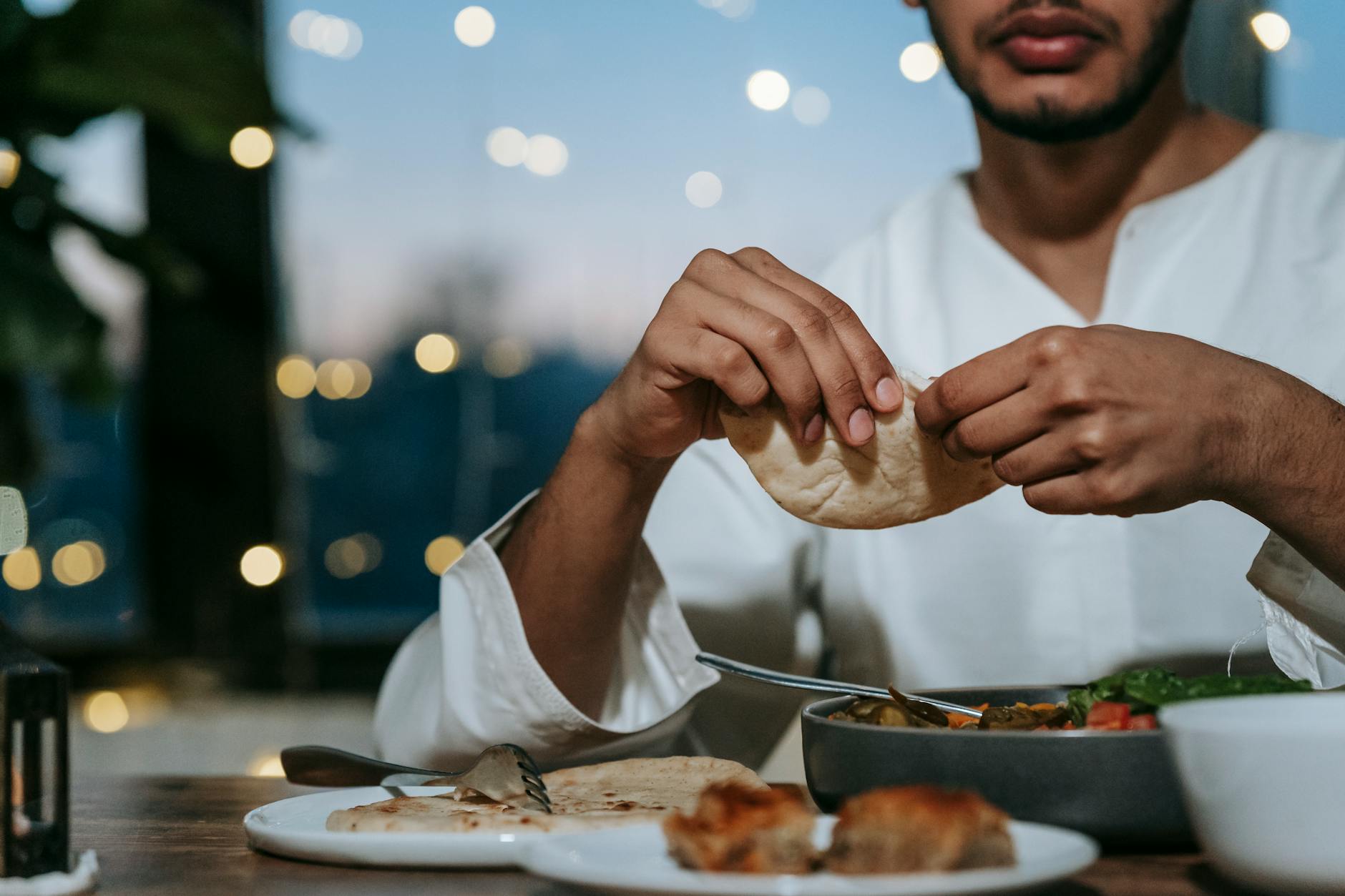
2. Bread and Butter
I love bread. I love butter. I love the ritual of the breadbasket being passes around the table. It is a way to begin a meal, start a conversation, and fill time when conversation is limited. Here are a few points of etiquette.
- Your bread should go on a small bread plate.
- The bread plate is above your fork, it is normally small, about 4-6 inches. There could be a small butter knife placed across the bread plate.
- When bread is offered to you, as in a passed basket consider the following procedure:
- Take the basket (mostly we pass to the right – counterclockwise) from the person on your left.
Offer bread to the person on your right; you hold the basket and say, “May I offer you” or “Would you care for (a roll, some bread, a breadstick)?” They should take one, then you would place one on your bread plate. The idea is to offer it before you serve yourself.
Bread goes on plate, then butter tends to be passed. You would take a “pat” or reasonable slice of butter from the common dish, with your clean, bread knife, and then place it on your bread plate next to the bread.
- Pick up your bread, break off a reasonable piece (about the size that you could eat in one bite). Use your butter knife and place a little butter on that bite, then eat it. Repeat the process.
- The whole slice of bread is never buttered at one time.
- This is the same for jelly, honey, any spread for your bread.
- If it is olive oil to dip in, you break a piece off your bread and dip in the oil then eat it.
- Nothing that touches your lips touches the common butter, oil, etc.
Bread is not a “course” in dining. It is an accompaniment meant to enhance the meal.
I like to share with my students that the bread or roll is not a “sandwich”. It is not appropriate to slice or tear your roll open, then spread butter on the inside, close it back up and proceed to eat the entire roll. This is one of those things that people who enjoy etiquette and table manners will take note. If one knows a few bread basics, it can be a sign of a confident and comfortable dinner guest.
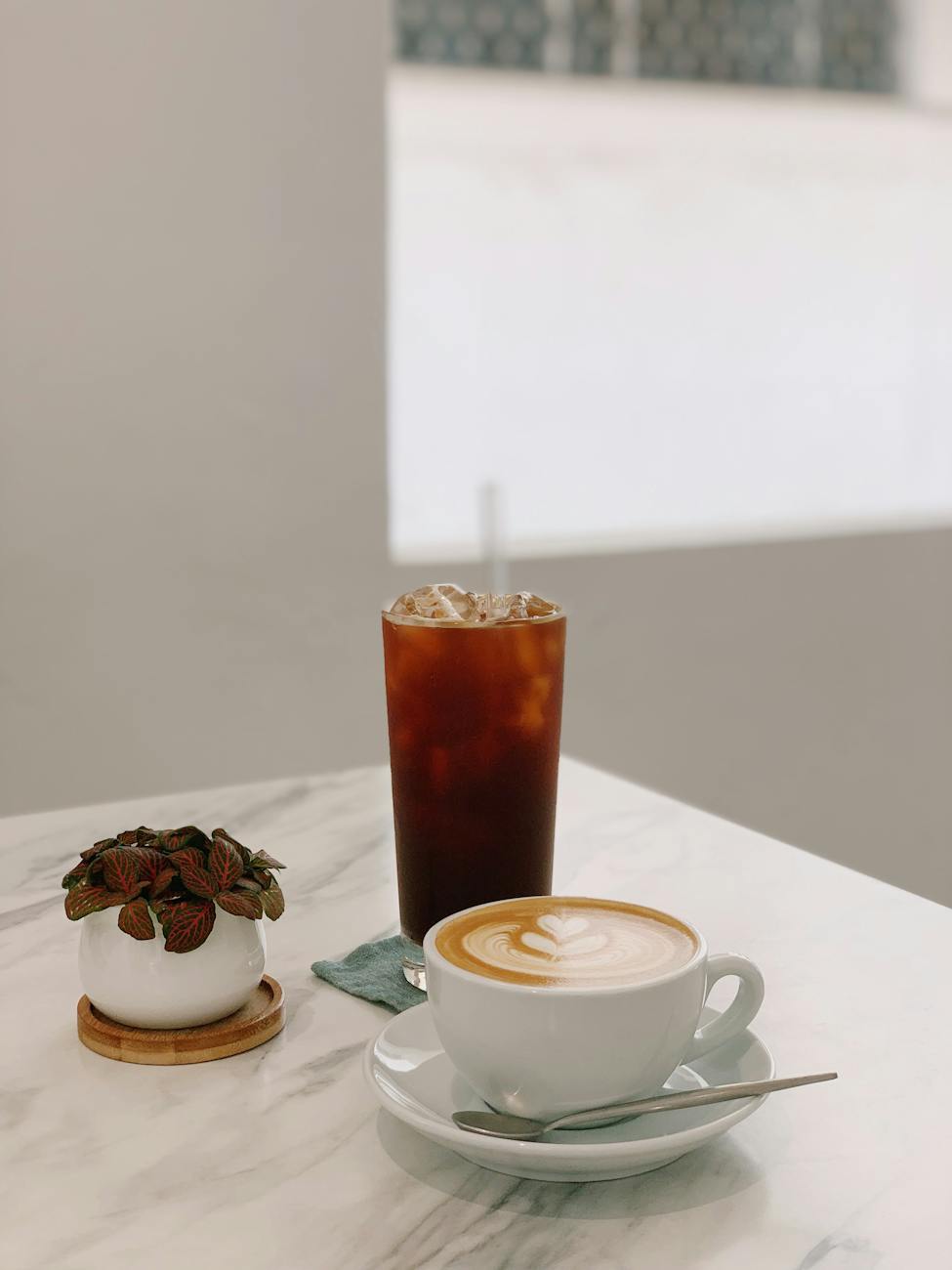
3. How to stir coffee, iced tea, or beverage and what to do with all the garnishes and sugar packets
The light that goes into someone’s eyes when they want to play the game of “Stump the ‘Etiquette Lady’.” How to stir a beverage is one of the top challenges I receive.
My quick answer, “With a spoon.” I know that is not what is being asked. What they are asking is the question of stirring your drink in a circular motion or having the spoon go back and forth. The answer is back and forth gently, with a spoon, keeping the liquid in the glass.
When a beverage is stirred in a circle, it is more likely to spill over the top.
When the spoon is moved forward and backward, the contents are easily mixed, the liquid tends to stay in the glass, and it is far less theatrical.
- If you have a saucer or small dish under the beverage, the (used) spoon is placed on the saucer.
- If you are using sugar packets, you softly tear one open at a time, pour the contents into your beverage, place the empty packet onto the saucer, then stir your beverage, and set the spoon on the saucer.
- If there is no saucer, set the used packets on the table above your beverage, which should be on the top right of your plate, above the knife and spoon.
- Please do not crumble or roll them into a ball, just set them on the table.
- If you do not like a lemon or other garnish, use a spoon to retrieve it from your beverage, and place it on a small plate if possible. If there is not small plate, you can ask for one. I try to avoid placing any food item onto a table.
If you know you do not enjoy lemons or other garnishes, it is best to let the server know when you are ordering. “May I please have an iced tea, with no lemon.”
The restaurant staff will clear the packets. If they do not, then it is appropriate when they come to check on your table to ask them, “Would you please clear this for me?”
The truth? There is no answer that works in every situation. The only real absolute is to respect the people you are eating with, respect yourself by acting in a manner you feel confident, and respect the restaurant or table you have been asked to join. When in doubt, watch the host. If you are the host, do the thing that is most simple and easy to keep the table and yourself tidy.
Please send your questions and comments for table basics and social graces I am excited to continue to share what is important for you every month!
If you have enjoyed The Hopeful Hostess articles, I would ask you to share them with your friends and colleagues. Thank you for all the new readers, I look forward to meeting you in person at an event soon! Until next Thursday, have a wonderful week and stay Hopeful!
 The Hopeful Hostess
Leave a comment