

Thank you. As a parent, I cannot tell you how many times I have “reminded” my people to say, “Thank you”. Since they could speak it has been a mantra in my parenting. “Did you say Thank you?”, is often the first thing I will say when they return to my care after being at a friend’s house. Lately I have been wondering, is the phrase, “Thank you” still meaningful in modern conversation?
At times, my people will go through the motions in our home. They “Thank” me for making dinner, they “Thank” me for allowing their friends over, but when I stop and look at our parenting, it is often a prompt I give before they have the chance to speak. Would they “Thank” if they were not reminded? What would happen if I let the reminders go, and listened for when they spontaneously said, “Thank you”. Are there things I could learn about them if I stop and listen for what they are grateful for?
Saying “Thank you” and “Your Welcome.”
Both parts are important. One without the other has little meaning. Conversational etiquette reminds us to:
Make Eye Contact with the person we are thanking.
Specifically thank the person for something or some act of kindness.
Example, “Thank you for bringing my order out so quickly!” or, “Thank you, you made my day so much easier by getting this done for me!”
In the case of Teens and Children, consider catching them in the act of kindness.
“Thank you for clearing your plate into the dishwasher.”
“I really appreciated you not picking up your phone when you got in the car today, it was nice to just talk for a few minutes.”
“I noticed that you took a minute to be sure your sister/brother had their lunch for school, that was very kind of you.”
There is a principle I learned in my early psychology classes called “Successive approximation” or just rewarding behaviors as they get closer to the behavior you would like to see. What this means for me, is when my kids do something close to what I have been asking them, I notice it.
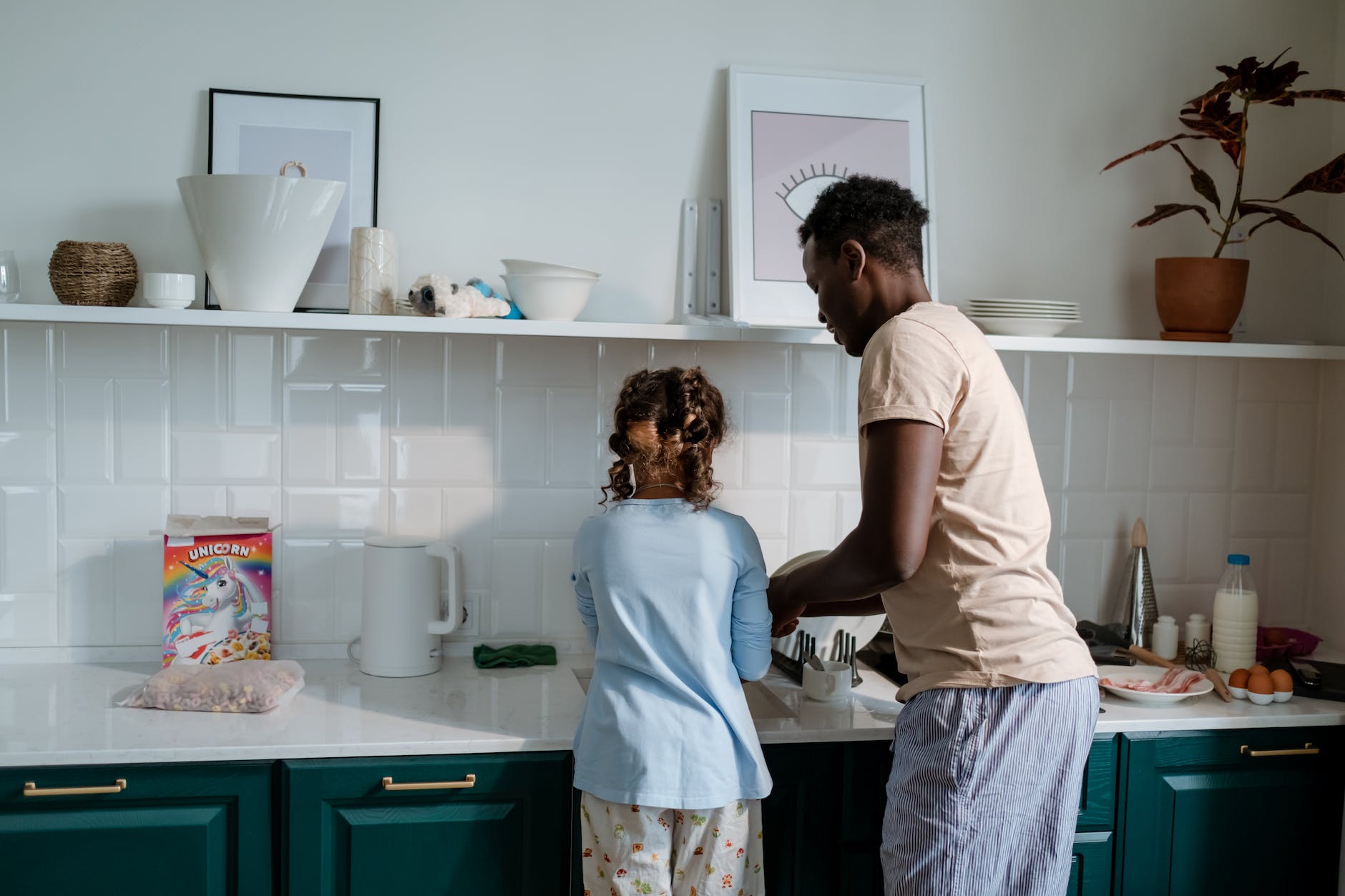
Example Goal: Bring in Trash Cans from street.
Step One: Let them know the expectation.
(Hard to hit a goal when you have not been told what that goal is)
“I would like you to start bringing in the trash cans from the street when you get home from school on Wednesday.”
I do not like to give a lot of “why” or tell them that my life would be better/easier. I am working in a limited time span of attention. If they baulk or ask why, then I respond in a non-emotional, very factual way. At this point, I try to be concise and precise: Task – Expectation – Done
Step Two: Remind the day of the task what is expected.
Wednesday morning: “Remember when you come home from school to bring the trash cans in from the street, please.”
Step Three: They walk in the door after school and the trash cans are on the curb.
No Drama or frustration or commentary, “Would you go ahead and bring the trash cans in from the street, it is Wednesday after school.”
There could be sighs and eye rolls and drama perhaps. Or there could be a quick, “Whatever” or “I know you told me a million times”. I try not to respond. Just let them have their moment and when they get the cans, Thank them.
“Thank you for bringing the trash cans into the garage, I appreciate it.”
Please note, as tempting as it is to use a sarcastic tone, or to tease them about “was that so difficult”, consider just “thanking” them. If we model kindness and gratitude, perhaps they will learn it for themselves.
Step Four: Next Week
“Tomorrow is trash day, please remember to bring the trash cans into the garage after school.”
Follow above again.
Consider if you are driving them home, to stop at the edge of the driveway this time and say, it is trash day. And just wait for them to remember what you had asked them. Again, aim for a simple statement of fact. Wait in silence and count to 15 silently in your mind. Then say, “It is trash day, your responsible for bringing in the trash cans, could you take care of that please.”
Thank them when they accomplish the task.
Step Five: You will keep repeating this process
At this point, the successive approximation begins. You know your family and how they respond to feedback. The key is feedback, not criticism.
Sarcasm, and teasing have become parenting strategies that some report brings their child into a closer conversational trust with them. While I agree that using a common language with your child can build rapport and fun, there is a time and place for that. There is also a time and place for basic language.
If one would like their child or teen to speak and behave in a certain manor, that adult or parent needs to model said behavior/word choice. When a parent makes a rule for the reason, “It makes me happy” or “I do so much for your and this family and this is all I am asking of you”. Teens hear, “Because I said so” and in some subtext, “Because you owe me this”. I do not believe that is the reason we ask our children to do tasks or participate in the family dynamic. It is my belief that the real tradition behind these chores is to help make an adult population that contributes to the betterment of general society.
The language spoken to children and teens has taken a more casual tone. I have encountered times where, because I do not engage in some of the “slang” or abrupt methods of speaking, I am left out of conversations. I am okay with that. My priority goes back to the proverb:
- Is it kind?
- Is it true?
- Is it necessary?
This format not only works for the content of conversation but also the language chosen.

Teens and children can use words and phrases that are shocking. It is very tempting to respond with, “I would have never said that to my mother/teacher/adult”. I have learned when I use a phrase such as these, the conversation is lost. The focus is now about the language chosen and not the issue that occurs.
I have also been thinking about the response is to, “Thank You”. “You are Welcome” is the traditional phrase, or in the words of fancy hotel chains and fast-food fried chicken establishments, “My pleasure” is spoken often. Things like, “No Problem”, “Of Course”, or “sure” are much more common. These are often spoken back without any sincerity. How can a person show sincerity in a conversation?
Stop, Look and Listen
- Stop what you are doing.
- Look the person in the eye.
- Listen to why they said, “Thank you.”.
Respond with a “You are welcome, I enjoy …” working with, seeing, doing, whatever the situation or task was.
I trust you enjoyed this first installment of “How to handle conversational difficulties.” Please continue to share your questions and comments. Have a wonderful week, and I will see you again next Thursday!
Stay Hopeful!
 The Hopeful Hostess
Leave a comment